
Congruent triangles
Congruent triangles are triangles that are identical in shape and size. This means all corresponding sides and all corresponding angles are equal. If you can perfectly superim...
Conscientious Objectors
This course explores the evolution of conscientious objection from 1916 to 1945, focusing on legal changes, societal reactions, and the treatment of objectors during the World...
Conserving Resources
Resource conservation involves protecting and preserving Earth's natural resources, which are essential for human survival and well-being. These resources include water, air,...

Coordinates
This course provides a foundational understanding of coordinate geometry, covering how to describe positions on a grid, identify and plot points, and work with negative coordi...
Core Practical: Compound Identification
Identifying unknown chemical compounds is a fundamental skill in chemistry, crucial for quality control, forensic science, and research. This practical module focuses on syste...
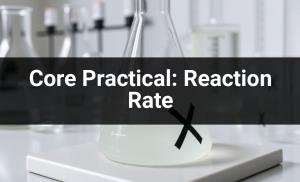
Core Practical: Reaction Rate
This core practical investigates factors affecting the rate of reaction, specifically focusing on the reaction between sodium thiosulfate and hydrochloric acid. The "disappear...
Core Practical: Reaction Rate
This practical aims to investigate factors affecting the rate of reaction using a visual method. Understanding how to accurately measure reaction rates is fundamental in chemi...
Corrosion and Prevention
Welcome to this learning session on Corrosion and Prevention In this course we shall address:Introduction to Corrosion and Metal DegradationRusting: Iron Corrosion and its Cau...

Counting Strategies
This course introduces fundamental counting strategies essential for systematically determining all possible combinations or arrangements. Learners will explore methods like s...
Cracking Hydrocarbons
Cracking is a process of thermal decomposition that breaks down large, complex hydrocarbon molecules into smaller, more useful ones. These larger molecules are typically found...
Cracking Hydrocarbons
Cracking is a process that breaks down large, long-chain hydrocarbon molecules into smaller, more useful hydrocarbon molecules. These larger molecules are typically found in l...