23 Extended response - Atmospheric science
Atmospheric science is the study of Earth's atmosphere, its processes, and how it interacts with other systems. Understanding these interactions is crucial for evaluating comp...
3-D shapes
Three-dimensional (3-D) shapes, also known as solids, are objects that occupy space and have length, width, and height. Unlike two-dimensional shapes which are flat, 3-D shape...

Adding and Subtracting
This course provides a foundational understanding of adding and subtracting numbers without a calculator, a core skill for GCSE Maths. It covers essential mental methods for q...
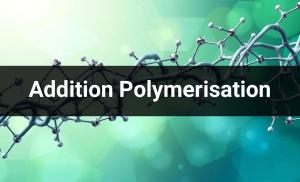
Addition Polymerisation
Polymers are large molecules, also known as macromolecules, formed from the covalent bonding of many smaller, identical or similar units. These giant molecules consist of repe...
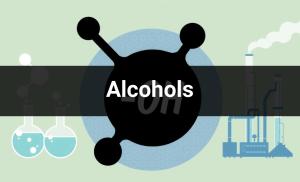
Alcohols
Welcome to this learning session on Alcohols In this course we shall address:Alcohol Functional GroupEthanol Structure and PropertiesCommon Alcohol ReactionsAlcohol Production...
Alcohols: Structure and Reactions
Alcohols are a class of organic compounds characterized by the presence of a hydroxyl functional group, which is an -OH group, attached to a saturated carbon atom. This functi...
Algebraic Indices
This course provides a comprehensive guide to algebraic indices, building upon foundational numerical index concepts. Learners will explore the four fundamental index laws, un...
Alkanes
Hydrocarbons are organic compounds composed solely of hydrogen and carbon atoms. They form the backbone of many organic molecules and are fundamental to understanding organic...
Alkene Addition Reactions
Welcome to this learning session on Alkene Addition Reactions In this course we shall address:Alkene Addition Reactions OverviewHydrogenation and HalogenationAlkene Hydration...

Alkene Reactions
Alkenes are unsaturated hydrocarbons characterized by at least one carbon-carbon double bond (C=C). This double bond makes them significantly more reactive than alkanes, which...

Alkenes
Alkenes are a class of hydrocarbons, which are organic compounds composed solely of carbon and hydrogen atoms. They are distinct from alkanes due to a specific structural feat...