Conserving Resources
Resource conservation involves protecting and preserving Earth's natural resources, which are essential for human survival and well-being. These resources include water, air,...

Coordinates
This course provides a foundational understanding of coordinate geometry, covering how to describe positions on a grid, identify and plot points, and work with negative coordi...

Core Practical: Chromatography
Chromatography is a powerful analytical technique used to separate components in a mixture. This separation relies on the differential distribution of components between two p...

Core Practical: Chromatography
Chromatography is a powerful analytical technique used to separate components within a mixture. It relies on the differential distribution of substances between two phases: a...
Core Practical: Compound Identification
Identifying unknown chemical compounds is a fundamental skill in chemistry, crucial for quality control, forensic science, and research. This practical module focuses on syste...
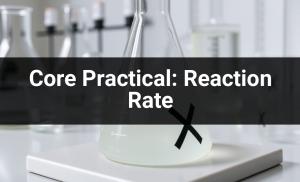
Core Practical: Reaction Rate
This core practical investigates factors affecting the rate of reaction, specifically focusing on the reaction between sodium thiosulfate and hydrochloric acid. The "disappear...
Core Practical: Reaction Rate
This practical aims to investigate factors affecting the rate of reaction using a visual method. Understanding how to accurately measure reaction rates is fundamental in chemi...
Core Practical: Water Purification
Water purification is the process of removing undesirable chemicals, biological contaminants, suspended solids, and gases from water. The goal is to produce water fit for a sp...
Core Practical: Water Purification
Water purification is a critical process used to remove impurities from water, making it safe for various uses, including drinking and laboratory experiments. Impurities can i...
Corrosion & Prevention
Corrosion is a natural process that converts a refined metal into a more stable form, such as its oxide, hydroxide, or sulfide. It is a gradual destruction of materials, usual...
Corrosion and Prevention
Welcome to this learning session on Corrosion and Prevention In this course we shall address:Introduction to Corrosion and Metal DegradationRusting: Iron Corrosion and its Cau...
Our courses give general knowledge. Where stated, a course is CPD certified: CPD certification records learning time and is not a qualification or licence. No course replaces practical training, supervision or assessment of competence. Never carry out hazardous work (for example at height, with lifting equipment, electricity, gas or machinery) on the strength of a course alone. Terms