
Atmosphere Evolution
Welcome to this learning session on Atmosphere Evolution In this course we shall address:Primordial Atmosphere and Early OceansPhotosynthesis and Oxygen AccumulationGeological...
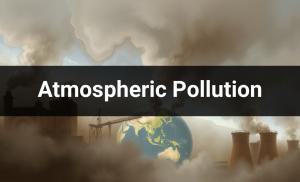
Atmospheric Pollution
Atmospheric pollution refers to the presence of harmful substances in the Earth's atmosphere, which can originate from natural processes or human activities. These pollutants...
Atmospheric Pollution Sources
Atmospheric pollution refers to the presence of harmful substances in the Earth's atmosphere, which can cause adverse effects on human health, ecosystems, and materials. These...
Averages and Range Fundamentals
Averages and range are fundamental concepts in statistics used to summarize and understand data sets. Averages, specifically the mean, median, and mode, provide a single value...
Averages from Frequency Tables
When working with large datasets, organizing information into a frequency table simplifies analysis. A frequency table lists data values and the number of times each value app...
Bar Charts and Data Representation
Bar charts are powerful visual tools used to represent data from tally charts or frequency tables. They provide a clear and immediate understanding of quantities across differ...
Bearings: Navigation and Measurement
Bearings are a fundamental concept in navigation, providing a precise way to describe direction. They are always measured clockwise from a fixed north line, ensuring a consist...

Black Body Radiation
All objects continuously emit and absorb infrared radiation, a fundamental aspect of thermal physics. This radiation is a form of electromagnetic wave, carrying thermal energy...
Calculating Probability and Expected Outcomes
Expected outcome, or expectation, is the average result you would anticipate from an event if it were repeated many times. It's a theoretical value, not a guarantee of any sin...

Calculator and Number Skills
This course provides a comprehensive guide to essential calculator functions and fundamental number skills, focusing on the correct application of the order of operations and...

Our courses give general knowledge. Where stated, a course is CPD certified: CPD certification records learning time and is not a qualification or licence. No course replaces practical training, supervision or assessment of competence. Never carry out hazardous work (for example at height, with lifting equipment, electricity, gas or machinery) on the strength of a course alone. Terms