

Synthesis, Critical Evaluation & Exam Techniques
Synthesis involves combining information and ideas from multiple sources to form a new, coherent understanding or argument. It goes beyond merely summarizing individual texts...

Temperature Effect on Rate
Temperature is a fundamental factor that significantly influences the speed at which chemical reactions occur. Generally, increasing the temperature of a reaction mixture lead...

Tests for Anions
Anions are negatively charged ions formed when an atom gains one or more electrons. Identifying specific anions in an unknown sample is a fundamental skill in chemistry, cruci...

Tests for Cations
Cations are positively charged ions, typically formed when metal atoms lose electrons. Identifying these specific metal ions in an unknown sample is a fundamental skill in che...

Tests for Gases
Identifying unknown gases is a fundamental skill in chemistry, crucial for understanding reaction products and ensuring safety. Simple chemical tests allow chemists to disting...

The Derek Bentley Case
This course explores the Derek Bentley case, a pivotal moment in the history of capital punishment in the UK. It examines the trial, public reaction, and its impact on legal r...
The Haber Process
The Haber process is a crucial industrial method for synthesizing ammonia from nitrogen and hydrogen. Developed by Fritz Haber and commercialized by Carl Bosch in the early 20...
The Haber Process
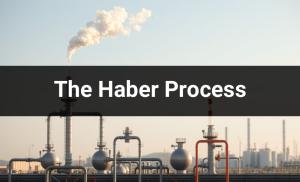
The Haber Process is a vital industrial method used to synthesize ammonia (NH₃) from nitrogen and hydrogen gases. This process is globally significant because ammonia is a key...

The Motor Effect
The motor effect describes the force experienced by a current-carrying conductor when it is placed in a magnetic field. This fundamental principle is what allows electric moto...
The Regression Line: Equation and Interpretation
The line of best fit, often referred to as the regression line, is a fundamental tool in statistics used to model the relationship between two variables. It provides a visual...
Our courses give general knowledge. Where stated, a course is CPD certified: CPD certification records learning time and is not a qualification or licence. No course replaces practical training, supervision or assessment of competence. Never carry out hazardous work (for example at height, with lifting equipment, electricity, gas or machinery) on the strength of a course alone. Terms