Adding and Subtracting
This course provides a foundational understanding of adding and subtracting numbers without a calculator, a core skill for GCSE Maths. It covers essential mental methods for q...
Addition Polymerisation
Polymers are large molecules, also known as macromolecules, formed from the covalent bonding of many smaller, identical or similar units. These giant molecules consist of repe...
Addition Polymers
Polymerisation is a chemical process where small, reactive molecules, known as monomers, join together to form very large molecules called polymers. This process typically inv...

African Cloth Parachute Game
Discover the cultural heritage and physical benefits of the African Cloth Parachute Game, a traditional Ghanaian activity that builds teamwork and coordination. Learn how to t...
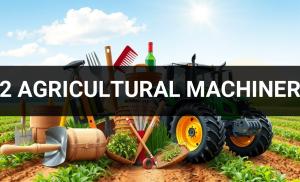
Agricultural Machinery
Understanding and identifying the uses of simple farm tools, equipment, implements, and machines is essential for effective crop production. This knowledge allows farmers to e...
Alcohols
Welcome to this learning session on Alcohols In this course we shall address:Alcohol Functional GroupEthanol Structure and PropertiesCommon Alcohol ReactionsAlcohol Production...
Alcohols: Structure and Reactions
Alcohols are a class of organic compounds characterized by the presence of a hydroxyl functional group, which is an -OH group, attached to a saturated carbon atom. This functi...
Algebraic Indices
This course provides a comprehensive guide to algebraic indices, building upon foundational numerical index concepts. Learners will explore the four fundamental index laws, un...

Alkanes
Hydrocarbons are organic compounds composed solely of hydrogen and carbon atoms. They form the backbone of many organic molecules and are fundamental to understanding organic...
Alkene Addition Reactions
Welcome to this learning session on Alkene Addition Reactions In this course we shall address:Alkene Addition Reactions OverviewHydrogenation and HalogenationAlkene Hydration...

Alkene Reactions
Alkenes are unsaturated hydrocarbons characterized by at least one carbon-carbon double bond (C=C). This double bond makes them significantly more reactive than alkanes, which...

Our courses give general knowledge. Where stated, a course is CPD certified: CPD certification records learning time and is not a qualification or licence. No course replaces practical training, supervision or assessment of competence. Never carry out hazardous work (for example at height, with lifting equipment, electricity, gas or machinery) on the strength of a course alone. Terms