Quadratic Equations: Factorisation Method
This course provides a foundational understanding of solving quadratic equations by factorisation, a key skill for GCSE Maths. Learners will explore the step-by-step process,...
Quadratic Graphs: Foundations
This course provides a foundational understanding of quadratic graphs, essential for GCSE Maths. Learners will explore how to generate points from quadratic equations, plot th...
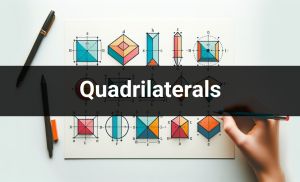
Quadrilaterals
Welcome to this learning session on 02 Quadrilaterals In this course we shall address:What are Quadrilaterals?Understanding the SquareExploring the RectangleSquare vs. Rectang...
Rate of Reaction Basics
The rate of reaction is a measure of how quickly reactants are consumed and products are formed in a chemical process. Understanding reaction rates is crucial in chemistry, as...
Rate of Reaction Basics
The rate of reaction refers to how quickly reactants are converted into products in a chemical process. It essentially measures the speed at which a chemical change occurs.

Rate of Reaction Graphs
Chemical reactions involve changes in the quantities of reactants and products over time. To visualize and analyze these changes, we often plot the concentration or amount of...
Rate: Pressure & Surface Area
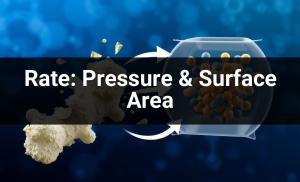
Reactions occur at varying speeds, from explosive to incredibly slow. Several factors can influence how quickly reactants transform into products.
Rate: Temperature Effects
Temperature is a fundamental factor that significantly influences the speed at which chemical reactions occur. Generally, an increase in temperature leads to a faster reaction...

Rates of Change
This course introduces the fundamental concept of rates of change, exploring how quantities vary over time through graphical representation. Learners will interpret distance-t...
Ratio 1
This course provides a foundational understanding of ratios, a key concept in mathematics for comparing quantities. Learners will explore how to express ratios, simplify them,...
Ratio 2: Problem Solving Essentials
This course provides a comprehensive guide to solving ratio problems, focusing on techniques for dividing quantities and handling differences within ratios. Learners will mast...

Our courses give general knowledge. Where stated, a course is CPD certified: CPD certification records learning time and is not a qualification or licence. No course replaces practical training, supervision or assessment of competence. Never carry out hazardous work (for example at height, with lifting equipment, electricity, gas or machinery) on the strength of a course alone. Terms